
The measurement of Genesis One
Right before we launched our Kickstarter campaign, we shipped a unit with the latest tuning to Oratory1990, a well-known expert in headphone measurements and calibration. He conducted very thorough tests, not only on measurement rigs but also on actual human ears. His results and analyses provide valuable insight into the sonic characteristics of Genesis One, and we’d like to share some of the most interesting findings with you here.
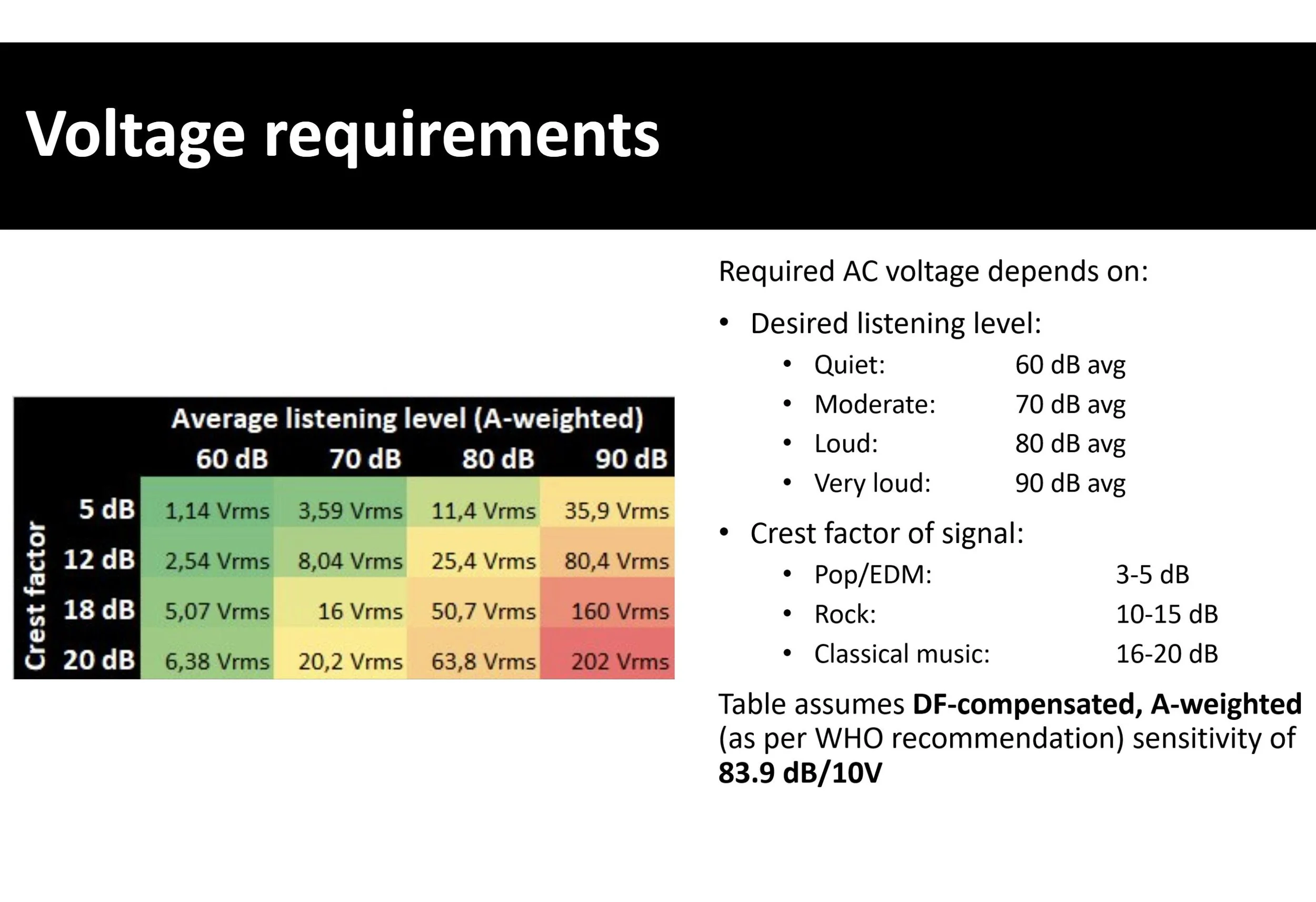
The table above shows the amplifier voltage required for different average listening levels. In general, you’ll need at least 10 Vrms for casual listening at moderate volumes. Modern music (pop and EDM) typically requires less voltage because it has lower crest factors, while classical and jazz, being much more dynamic, require higher voltage to reproduce peaks cleanly.
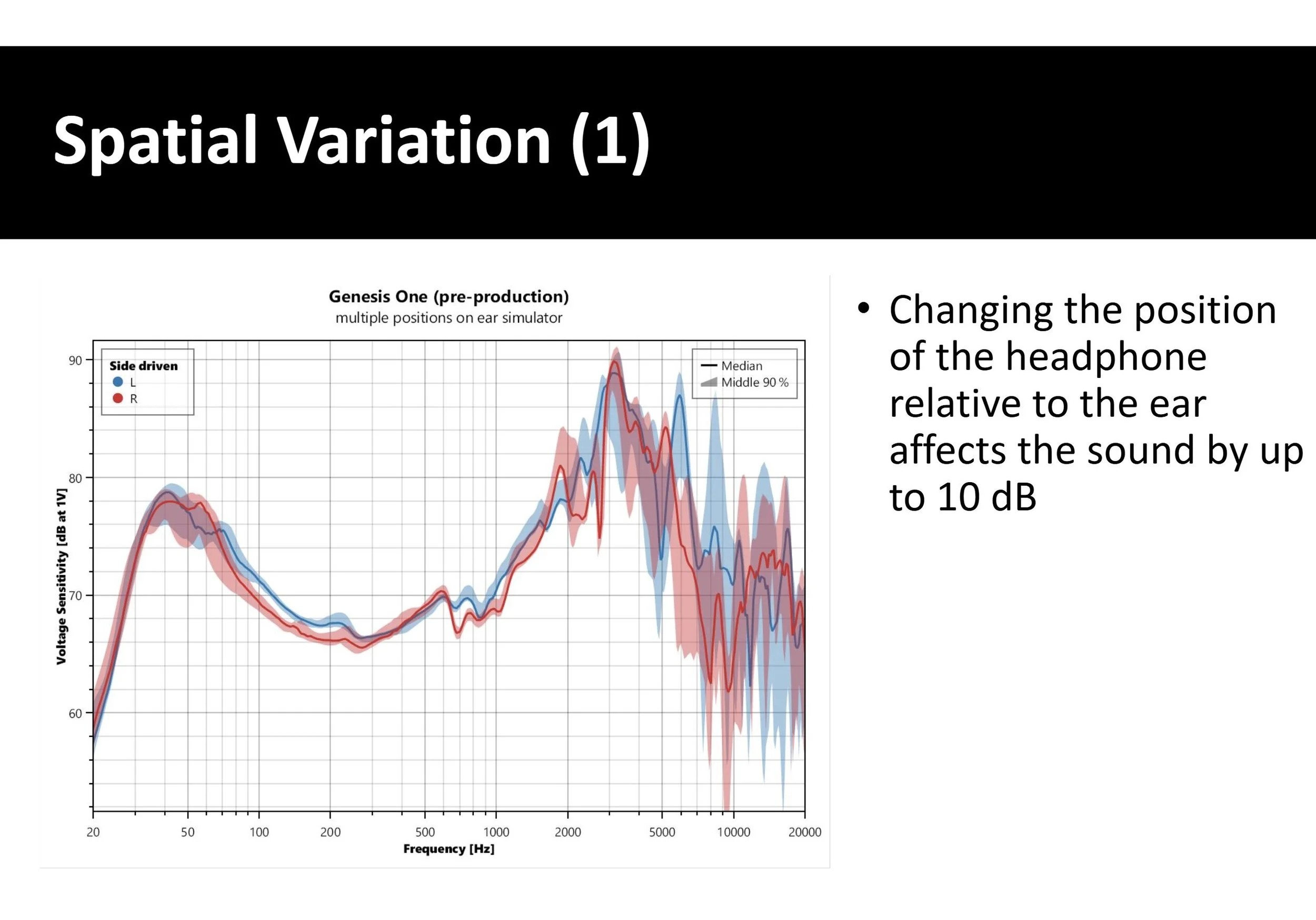
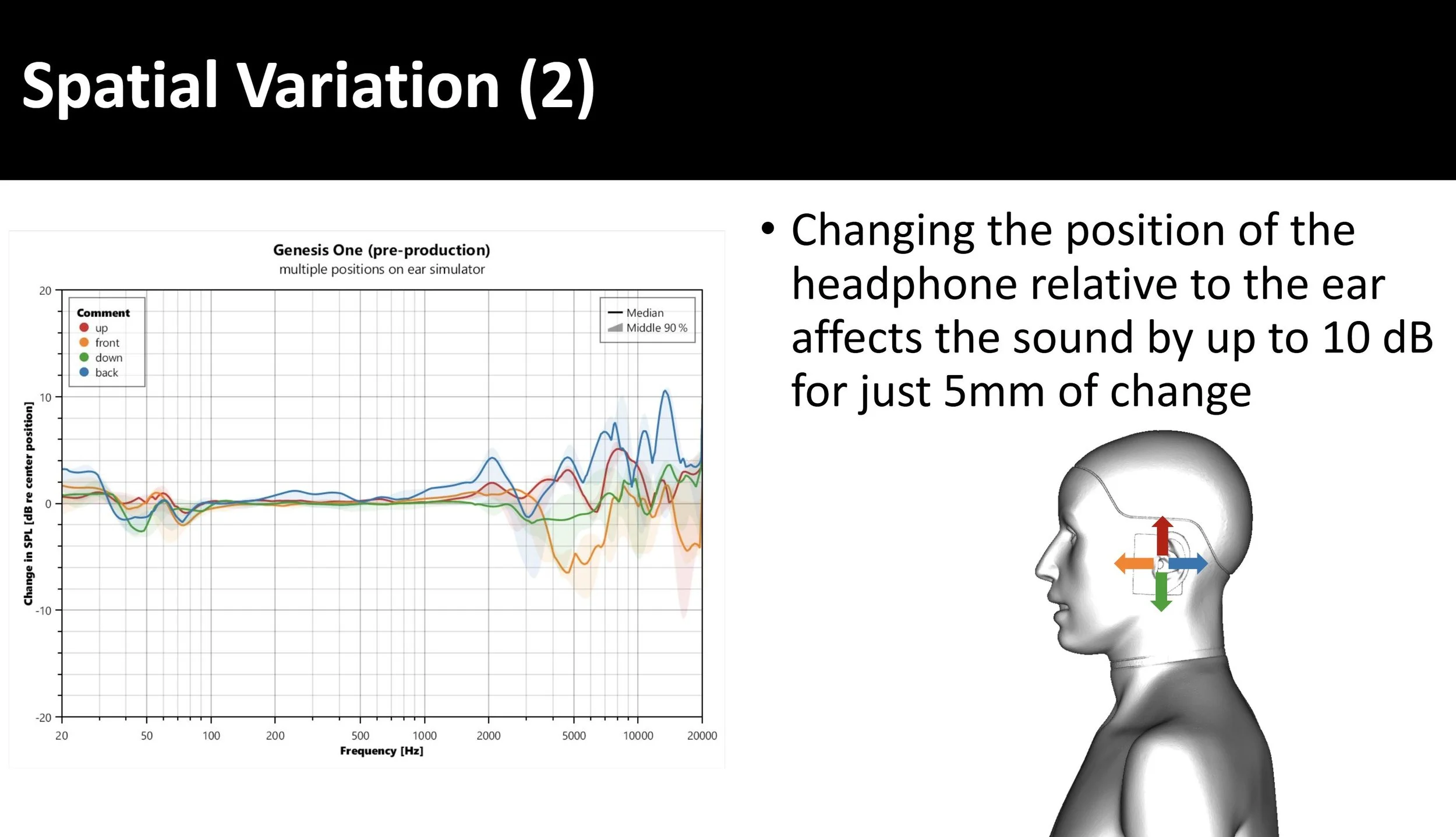
The graphs above show how changing the headphone’s position relative to the ear affects the sound. The impact on the bass and midrange is minimal, while the treble can vary by up to 10 dB. Moving the headphone back increases treble, while moving it forward reduces treble. This occurs because shifting the headphone back decreases the distance between the diaphragm and the ear.
Similarly, moving the headphone up tends to increase treble, while moving it down has very little effect. This behavior is normal, especially for large headphones. Listeners should wear the headphones in the position that feels most natural and comfortable. Just keep in mind that different fits may result in slightly different treble levels from person to person.
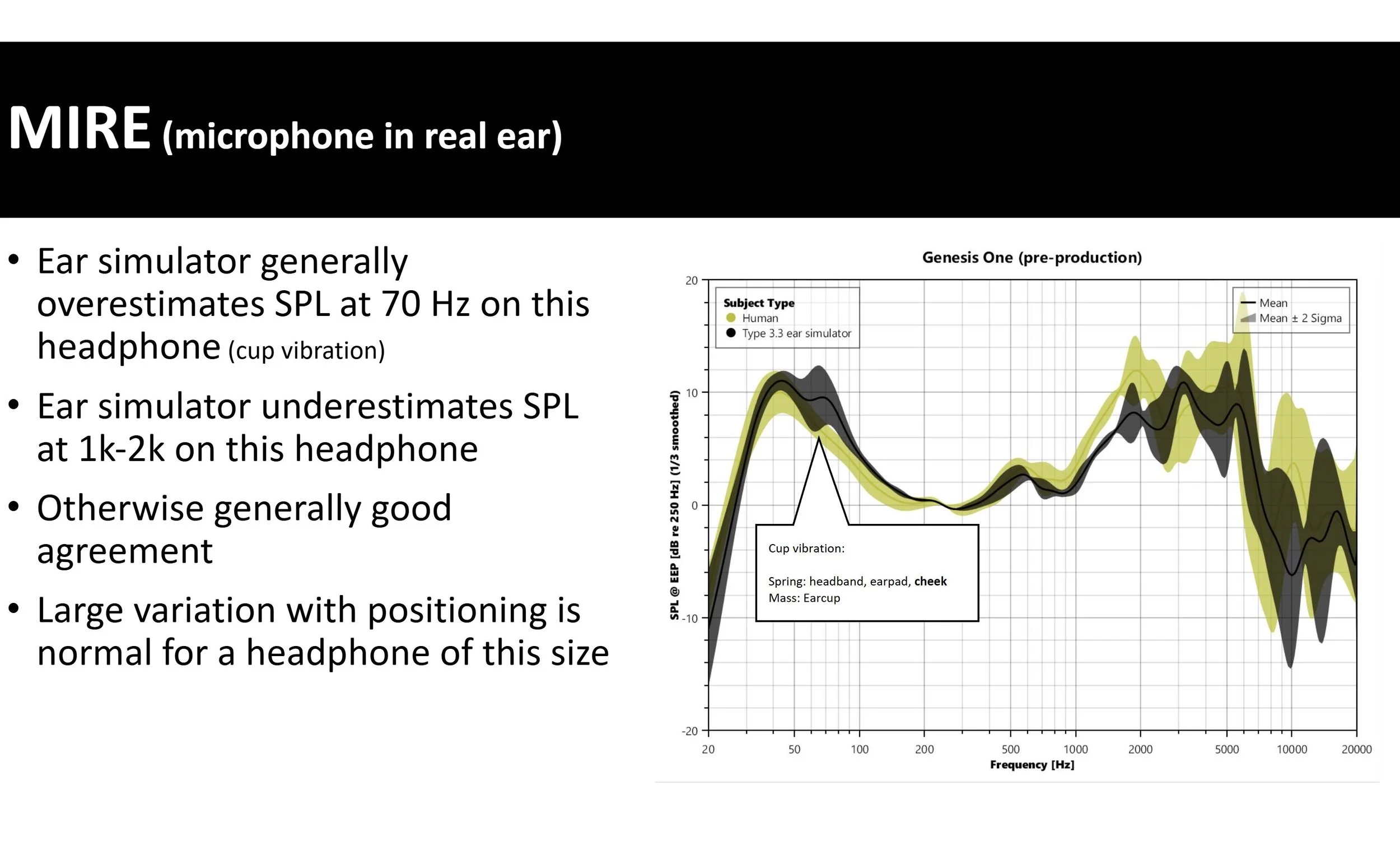
The graph above shows the MIRE (Microphone-In-Real-Ear) results. Measurements were taken with microphones placed at the ear entrance, without blocking the ear canal. Tests were conducted on two human subjects as well as on an ear simulator.
As expected, on-human results vary due to differences in individual ear geometry. Overall, the ear simulator ("45CA-10") aligns well with the human measurements. However, there are some detailed differences in the treble region: for example, the human ears show a stronger peak around 2 kHz, while the ear simulator shows a higher peak closer to 3 kHz. Additionally, the treble-to-midrange level difference (roughly 15 dB) is slightly smaller than what we observed in earlier measurement sessions.
We have taken these findings into careful consideration throughout the tuning process. Moving forward, at Lily Audio we will continue working closely with industry experts and rely on a combination of ear-simulator measurements, real-ear MIRE tests, and critical listening evaluations to refine and develop our headphones.