
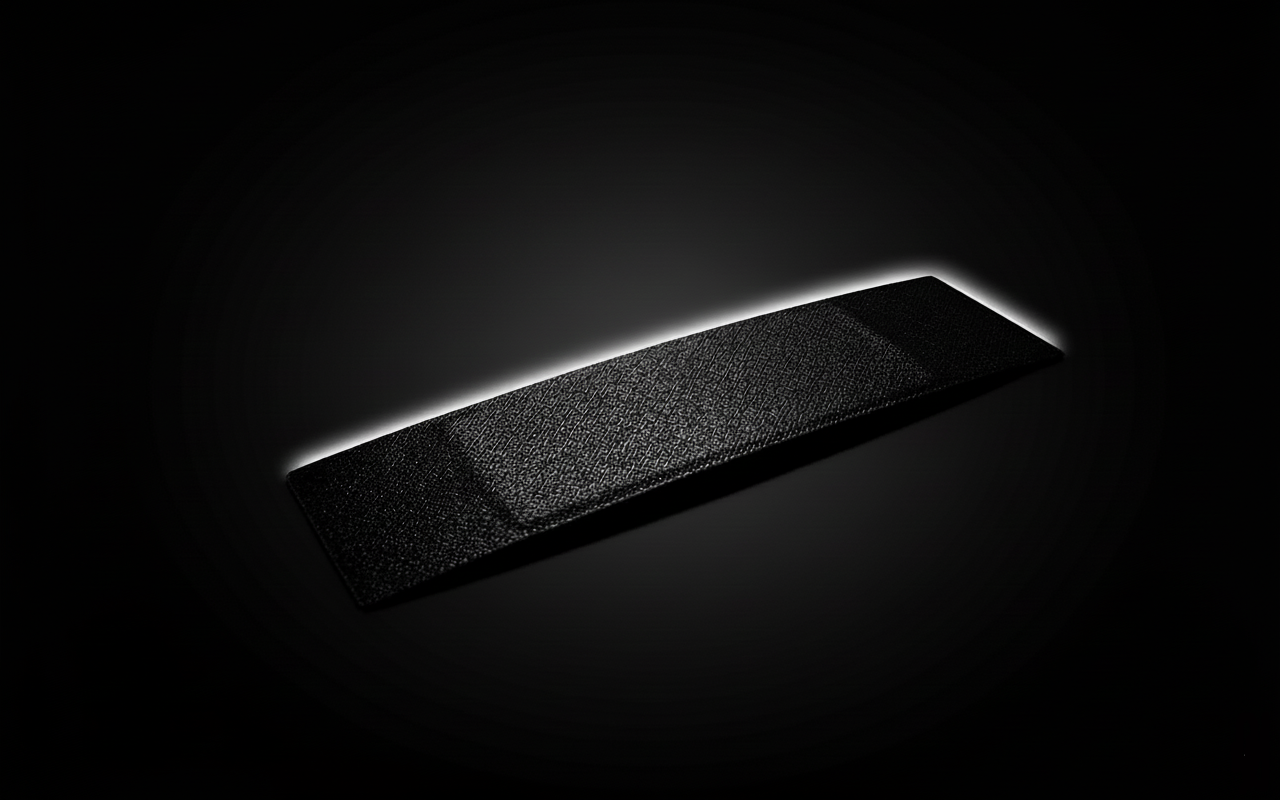
CRYSTALCORE™
THE LIMITATION OF CONVENTIONAL DRIVERS
To move air, you must move mass and that mass determines everything. Heavy diaphragms deliver bass authority. Light diaphragms deliver speed and resolution. But mass and speed are in direct opposition, and no conventional architecture escapes it.
Dynamic drivers prioritize weight for punch and impact. Planar magnetics shed mass for control and detail. Electrostatics push speed to its limit, sacrificing bass weight entirely.
Each is a coherent philosophy. Each is still a compromise — because all three generate force the same way, through a field acting on a moving structure.
Changing it requires starting somewhere else entirely.
A DIFFERENT FOUNDATION
CrystalCore™ does not optimize the trade-off. It eliminates its cause.
Conventional drivers generate force through electromagnetic or electrostatic fields acting on a moving structure. Inertia always pushes back. Speed and mass will always be in tension.
CrystalCore™ replaces this mechanism with a solid-state crystalline actuator that deforms directly in response to the signal. No coil. No field. No inertial penalty.
The result: a driver that is heavy and fast. The empty corner, filled.
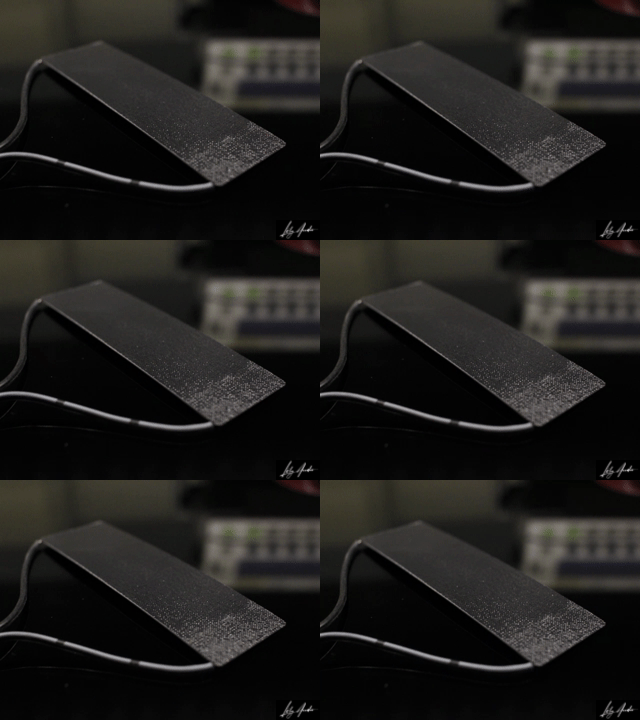
FULL-RANGE SOLID-STATE TRANSDUCER.
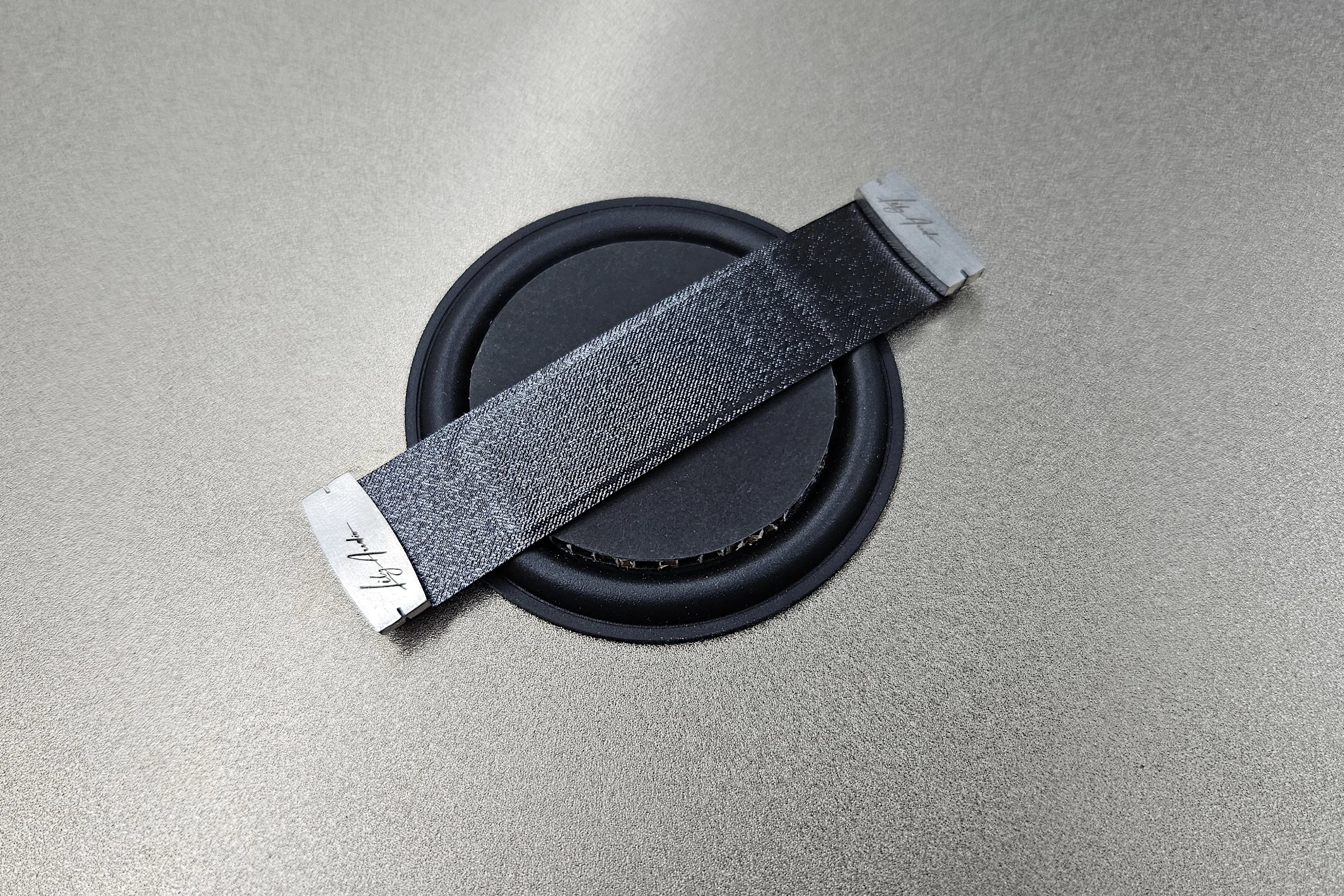
CrystalCore™ is a patented, multi-layer composite transducer meticulously engineered from advanced piezoelectric crystal and carbon fiber. While conventional piezo designs struggle to reproduce frequencies below 400 Hz, CrystalCore™ breaks the mold. Highly optimized to deliver a seamless, full-range frequency response (20-50 kHz) from visceral sub-bass to pristine upper treble. It stands as the world’s first full-range, piezo-based transducer built specifically for audiophile headphones.
A NEW CLASS OF DRIVER
Most headphone drivers move sound by pushing air through a chain of mechanical parts. CrystalCore™ removes the chain entirely. Explore how each technology works — and why the difference matters.
BORROWED FROM BEYOND HEARING
CrystalCore™ uses crystalline actuator technology originally engineered for ultrasonic applications, from medical diagnostic scans to precision sensors, where materials must respond millions of times per second. Brought into audio, it eliminates the inertial delay that limits every conventional driver. No coil. No tensioned film. Just a crystal that moves the instant the signal arrives.
BASS AUTHORITY THROUGH MASS
Bass slam is a physical property. A heavier diaphragm stores more kinetic energy, moves more air, and hits harder delivering a visceral sub-bass weight and transient impact that no amount of EQ can replicate. While a typical dynamic driver’s moving assembly weighs less than 0.06 grams, the CrystalCore™ honeycomb diaphragm weighs 3.5 grams, a massive, deliberate increase in mass. In a conventional headphone, this weight would destroy transient speed. But CrystalCore’s solid-state actuator is indifferent to the load it drives. The full 3.5 grams slam on every single note, delivering the authority of a heavy, speaker-tier driver alongside the speed of an electrostatic.

THE REWARD OF ZERO INERTIA
A dynamic driver coil overshoots. A planar magnetic film rings. Both leave mechanical artifacts at the edges of every note — smearing that accumulates across a complex mix into a loss of definition, air, and separation. CrystalCore™ has no coil to overshoot and no tensioned film to ring. The crystal moves exactly as far as the signal demands, then stops. What follows is the recording — not the driver.
ELECTRICAL CHARACTERISTICS
CrystalCore™ is a solid-state capacitive load — fundamentally different from the resistive loads of dynamic and planar magnetic drivers. Because the crystal layer stores and releases charge rather than dissipating it, CrystalCore™ draws almost no current. The energy goes into the crystal, not into resistance. What it needs instead is voltage.
Impedance in a capacitive driver is frequency-dependent:
Z = 1 / (2π × f × C)
At 1kHz, a 160nF CrystalCore™ driver presents approximately 1,000Ω — far higher than a typical dynamic driver, but requiring only a fraction of the current.
Amplifier pairing details are available on each headphone's product page.
The architecture is only half the story.
Hear what CrystalCore™ sounds like in Genesis One.
Explore Genesis One